Clarity through action: How Tissby found his path by exploring what truly drives him

For many students, figuring out your career path doesn’t happen in a lecture hall. It happens when you step into real work—where you test ideas, adjust expectations, and learn by doing.
This is the story of Tissby Wang (Xinyu WANG), a Marketing and Communication Intern at alliz, whose journey shows that the most valuable thing an internship can give you isn't a job title—it's a way to figure out what you actually want.
Meet Tissby Wang
Tissby Wang is an international student based in Japan. He earned his Bachelor’s in Global Studies, with a focus on economics and migration. He’s now pursuing a Master’s in Global Communication Practice, focusing on cross-cultural communication—especially how international students find jobs in Japan. That’s why he looked for internships in career communities, recruitment platforms, and tourism, which are places where cross-cultural communication happens in real time.
He joined alliz as a Marketing and Communication Intern in October 2025. Now that his internship is ending, he’s been thinking about what he really gained. Rather than a fixed career plan, it was more about exploring options. More importantly, it gave him a way to figure out what he wants, one step at a time.
Why alliz Became a Testing Ground for His Career
Tissby's first task at alliz was writing an event recap based only on a video recording. Since he hadn't attended the event, he ended up watching it over and over, trying to piece together what was said. He had imagined finishing it in a day or two, but instead spent the first few days figuring out what a good LinkedIn article should look like, including its structure and tone, as he had no template to follow.
That’s when he really felt the difference between school and work. In school, there's always a rubric: you know what "good" means. However, it’s less clear at work. A post might get lots of engagement even if it’s not perfectly written… or the other way around. There’s no one “correct” answer. Tissby realized he had to build his own judgment, and he learned that getting something to 80% and publishing it is better than spending triple the time chasing perfection.
The real turning point came when he moved from executing tasks to planning them. He proposed a content series about Japanese workplace culture for international students. Suddenly, he wasn’t just writing, but rather choosing what to write, why it mattered, and how to make it useful. When the idea is yours, he says, “you feel a different kind of motivation. You think more about the audience, the platform’s goals, whether you really understand the topic, and if you can support it with data. Once you answer those questions, the writing gets easier.”
Beyond the workplace series, he also helped design a community interview project from scratch. That meant planning the questions, adjusting the interview flow for different people, and turning real conversations into articles that LinkedIn readers would care about. "It was the first time I got to take something from zero to one," he says. "Being involved in the concept, not just the execution—that changed how I see the work."
Growing Through Practice
Tissby's growth is not just in terms of skills, but also in the way he views his professional identity.
On the practical side, he improved at content creation and adapting messages across languages and cultures. For example, he translated English articles into short Japanese posts for X, and learned how tone and focus change across platforms. He also helped edit a highlight video and wrote recaps for multiple events.
But the bigger shifts were internal. He learned to stop waiting for instructions. In school, if you don't know something, you ask the professor. In an internship, you still ask questions, but only after first exercising autonomy and resourcefulness—searching, reading, imitating, and exhausting your own efforts before seeking guidance. That proactive sequence was a new kind of active learning for him.
He also became more deliberate about how he communicates. In academic writing, he was used to focusing on what he wanted to say—his interests, his analysis, his point. Professional communication required a different approach. Through the community interview project, he realized good writing isn’t just about expressing yourself. It has to fit what the organization wants to share—and even more, what the audience actually wants to read. Moving from “what I want to say” to “what the audience needs to hear” was one of his biggest takeaways.
Another key lesson was that he also had to let go of the idea that work always goes smoothly. When coordinating interviews for the project, he first imagined a neat weekly schedule: questions, invitations, interviews, articles. Reality was messier: slow replies, changing schedules. He learned to follow up repeatedly and adjust expectations. "Workplace communication has more variables than I anticipated," he says. "You can't control everything."
Underlying all these experiences was a fundamental cognitive shift: from a “student mindset” to a “workplace mindset.” As a student, you expect someone to tell you exactly what to do. In a real job, no one holds your hand. You have to figure it out and take ownership.
Finding His Career Compass
Before the internship, Tissby thought he wanted to work in marketing, preferably in a startup where he'd have autonomy. After completing his internship at alliz, he gained a clearer understanding of what real marketing work actually involves, which differed from his initial expectations. This realization made him recognize that while he still enjoys marketing, he is now interested in exploring a range of fields, including PR and consulting, as he wants to compare different areas of communication-related work and discover where his strengths truly fit.
This internship didn't give him a final answer, but something more valuable: a method. It taught him how to find out what he wants—by trying things, reflecting, adjusting. That, he believes, is worth more than any single job offer.
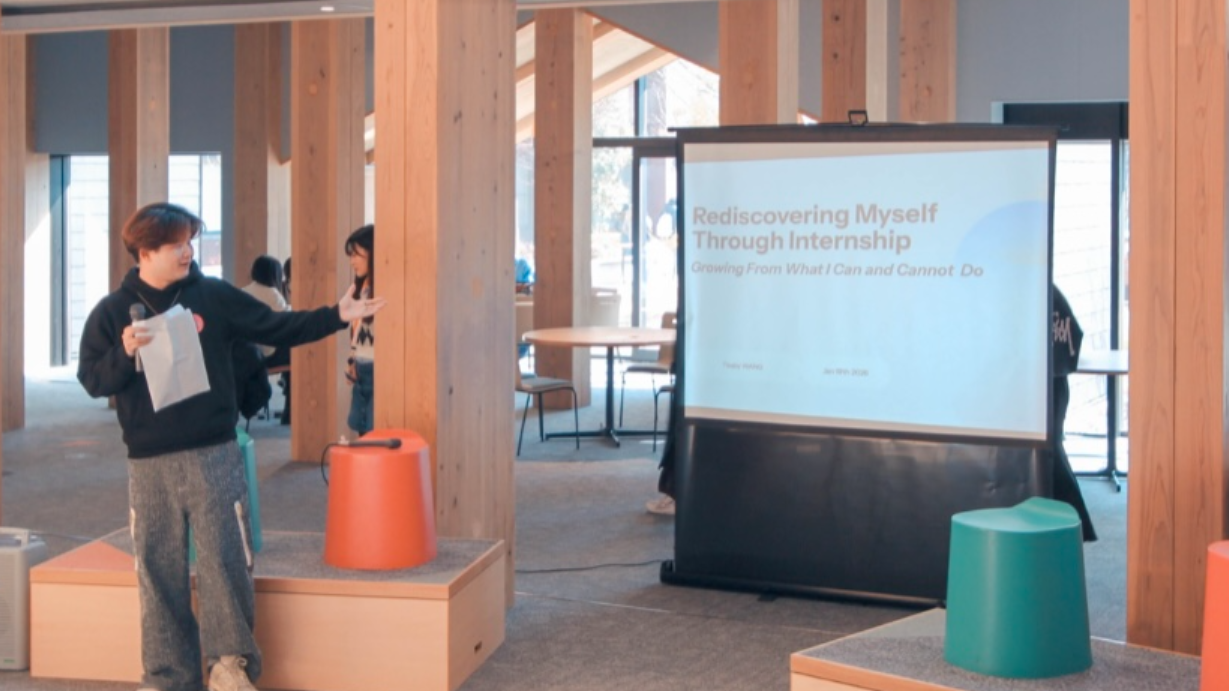
He also attended two offline events organized by alliz—once as a staff member and photographer in Tokyo, once as a student speaker in Beppu. Being behind the scenes and in front of the audience gave him a much more complete understanding of how events function: in Tokyo, he supported event operations while documenting visually; in Beppu, he delivered a presentation and engaged directly with attendees. Experiencing both perspectives—contributing behind the scenes and standing in front of the crowd—made the sense of contribution deeply rewarding.
Message to the Community
Tissby's advice to students who are unsure about their careers is simple: “Clarity isn't found through overthinking; it's earned through execution. And if you can, align your career with your intrinsic interests, you can unlock a level of sustainable drive motivation that simply can't be manufactured.”
For those considering remote internships, he adds that it requires more discipline and proactive communication. If possible, find something that mixes online work with offline meetups—you get the flexibility and the human connection.
Thank you to Tissby ( Xinyu WANG) for sharing his journey. His story shows that an internship isn’t just a step toward a job. It’s a space to explore, learn, and slowly figure out who you want to become.
Want to meet more young people like Tissby who are shaping their careers through action? Curious how to turn your interests into practical experience?
Join the alliz community and connect with people who grow through practice, reflection, and collaboration.